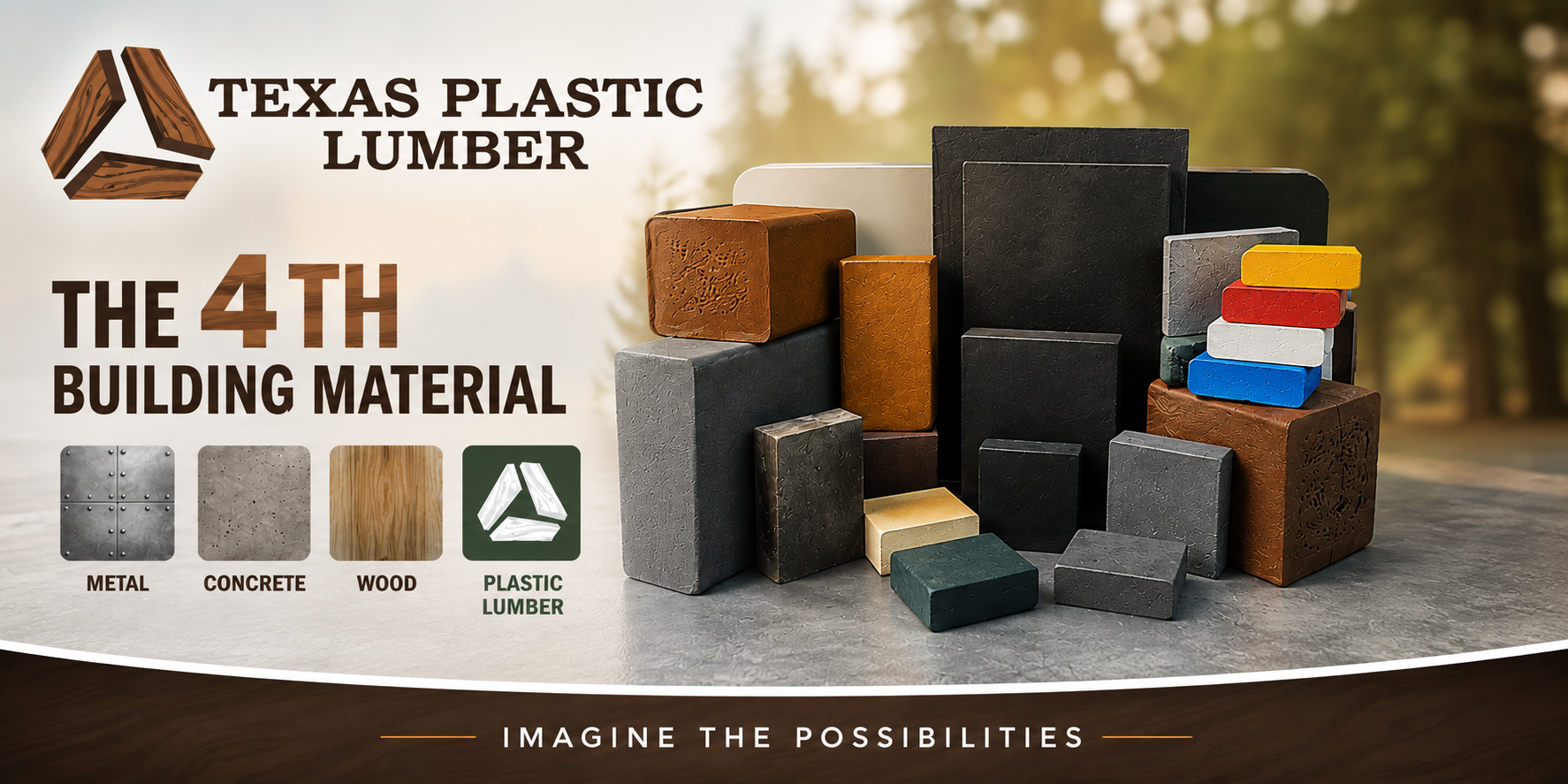
Plastic lumber can provide manufacturers with another material option when traditional wood, metal, or other materials create problems with moisture, corrosion, rot, maintenance, weight, consistency, or service life.
OEM applications are different from most material purchases. The question often isn't simply, “What size board do you sell?” It may be, “Can we build this component differently?” “Can we eliminate a recurring failure?” or “Is there a material that better fits what we're trying to accomplish?”
Structural and non-structural plastic lumber offer different performance characteristics, dimensions, colors, and fabrication possibilities. Selecting the right material starts with understanding the component—what it does, how it is supported, the loads or impacts it experiences, its operating environment, required dimensions and tolerances, how it will be fastened or fabricated, and the expected service life.
Start with the application — not the board. Tell us what you're manufacturing, what the component needs to accomplish, what you're using today, and what you would like to improve. We'll help identify plastic lumber options worth evaluating.
Your projects stay your projects. We understand that product development, material sourcing, component designs, testing, and manufacturing processes may be proprietary. We don't use our customers' projects to market to their competitors.
Plastic lumber can be considered for industrial equipment, machinery, fabrication, and manufacturing applications where components are exposed to moisture, chemicals, impact, abrasion, ground contact, or repeated use. Structural and non-structural options allow the material to be evaluated for everything from simple blocking and wear components to applications requiring greater stiffness or load-carrying capability.
Applications to consider: Equipment supports • machinery bases • wear strips • guides • rails • blocking and spacers • dunnage • work surfaces • equipment mounting • protective barriers • skids • pallets • material-handling components • replacement of deteriorated wood components.
Questions to consider: Component function • design loads • concentrated or point loads • unsupported span • impact and abrasion • operating temperature • chemical or moisture exposure • required dimensions and tolerances • fastening method • machining or fabrication requirements • structural or non-structural material.
Plastic lumber can be considered by manufacturers of trailers, truck bodies, utility vehicles, mobile equipment, and other transportation products where traditional wood is exposed to moisture, road spray, chemicals, impact, abrasion, and repeated loading. Structural and non-structural options allow manufacturers to evaluate the material based on the actual function of the component rather than simply replacing wood dimension-for-dimension.
Applications to consider: Trailer decking • utility and equipment trailer components • enclosed trailer flooring and supports • truck and service-body components • equipment platforms • ramps • wear surfaces • blocking and spacers • equipment mounting • skids • protective components • specialty fabricated parts.
Questions to consider: Intended use • vehicle or equipment weight • distributed or concentrated loads • crossmember or support spacing • unsupported span • deflection requirements • impact and abrasion • operating and surface temperature • fastening method • dimensional requirements • weight considerations • structural or non-structural material.
Plastic lumber can be considered for food processing, cold storage, refrigerated facilities, wash-down areas, and other manufacturing environments where moisture, cleaning chemicals, temperature changes, and sanitation requirements can shorten the life of traditional wood components. Structural and non-structural options allow material to be selected according to the function, loading, environment, and fabrication requirements of the component.
Applications to consider: Door and opening components • equipment supports • machinery bases • wall and equipment protection • curbing • blocking and spacers • work surfaces • storage-area components • racks and supports • equipment mounting • protective barriers • wet-area components • replacement of deteriorated wood components.
Questions to consider: Component function • design loads • operating temperature • temperature cycling • moisture and condensation • wash-down requirements • cleaning or chemical exposure • dimensional requirements and tolerances • fastening method • sanitation requirements • structural or non-structural material.
Plastic lumber can be considered for material-handling, warehouse, distribution, and logistics applications where components are exposed to repeated impact, abrasion, moisture, chemicals, heavy equipment, or continuous use. Structural and non-structural options allow manufacturers and facility operators to evaluate the material for components ranging from simple blocking and protective surfaces to applications requiring greater stiffness and load-carrying capability.
Applications to consider: Dunnage • pallets • skids • blocking and spacers • storage rack components • equipment supports • forklift-impact areas • protective barriers • wear strips • guides and rails • conveyor supports • loading-area components • work surfaces • equipment mounting • specialty fabricated components.
Questions to consider: Component function • design loads • concentrated or point loads • forklift or equipment impact • abrasion • unsupported span • operating temperature • moisture or chemical exposure • dimensional requirements and tolerances • fastening method • fabrication requirements • structural or non-structural material.
Plastic lumber can be considered by manufacturers of recreational, outdoor, specialty, and commercial equipment where components are exposed to weather, moisture, ground contact, impact, or repeated use. Structural and non-structural options allow manufacturers to evaluate plastic lumber for components where durability, dimensional consistency, color, reduced maintenance, or long service life may provide advantages over traditional materials.
Applications to consider: Recreational equipment • utility and outdoor equipment • hunting and sporting equipment • campground equipment • seating and bench components • platforms and work surfaces • equipment bases • storage components • frames and supports • blocking and spacers • protective components • specialty fabricated parts • replacement of wood components.
Questions to consider: Component function • design loads • unsupported span • impact and abrasion • outdoor exposure • operating and surface temperature • ground contact • required dimensions and tolerances • color requirements • fastening method • machining and fabrication • production quantities • structural or non-structural material.
Plastic lumber can be considered by manufacturers and fabricators as a component or raw material in products traditionally made from wood, metal, or other materials where moisture, corrosion, rot, maintenance, or service life create recurring problems. Available dimensions, structural and non-structural formulations, colors, and fabrication possibilities allow the material to be evaluated as part of a manufactured product rather than simply as a replacement board.
Applications to consider: Manufactured building components • fabricated assemblies • equipment enclosures and supports • frames and bases • mounting components • backing and blocking • spacers • wear components • protective components • ground-contact components • custom-cut parts • specialty fabricated products • replacement of wood components.
Questions to consider: Component function • structural or non-structural use • design loads • required dimensions and tolerances • operating environment • temperature • moisture or chemical exposure • fastening and joining method • machining and fabrication requirements • color • surface finish • production quantities.
Manufacturers solve problems every day that don't fit neatly into a category. If you're dealing with a component that rots, corrodes, absorbs moisture, requires repeated maintenance, wears out, or simply isn't performing the way you need it to, plastic lumber may provide another option worth evaluating.
Start with the application — not the board. Tell us what the component does, what you're using today, what's working, what's failing, and what you would like to improve.
Drawings, photographs, dimensions, loads, spans, operating temperatures, fastening requirements, production quantities, and information about the operating environment can help us evaluate the options.
You don't need to know which plastic lumber you need. That's our job to help determine.
Your project stays your project. We understand that product development, sourcing, testing, designs, and manufacturing processes may be proprietary. We don't use our customers' projects to market to their competitors.